
Transperiphery Conversations #3 Philosopher and cultural theorist Ovidiu Ţichindeleanu talks with Zoltán Ginelli about Négritude and Pan-Africanism in Eastern Europe by focusing on case studies and insights from Hungary and Romania.
Kategória: English Blog
Decolonising the Non-Colonisers?
The 12th session of the Decolonising Europe Lecture Series organized by the Amsterdam Center for European Studies (ACES) asks where is Eastern Europe in the history of global colonialism? Zoltán Ginelli and James Mark explores why Eastern Europe has been largely absent from mainstream histories of global colonialism and studies of postcolonialism and decolonialism.

Decolonizing the Non-Colonizers? Historicizing Eastern Europe in Global Colonialism
What would it mean to ‘decolonize’ Eastern Europe? We aim to answer by situating Eastern Europe within broader colonial, anti-colonial and decolonial projects, to understand how the region’s historically and geographically shifting relations to coloniality and race inform current political dynamics.
Call for Papers | American Association of Geographers Annual Meeting | Seattle, WA | April 7–11, 2021 | Virtual Session convened by Zoltán Ginelli and Jonathan McCombs
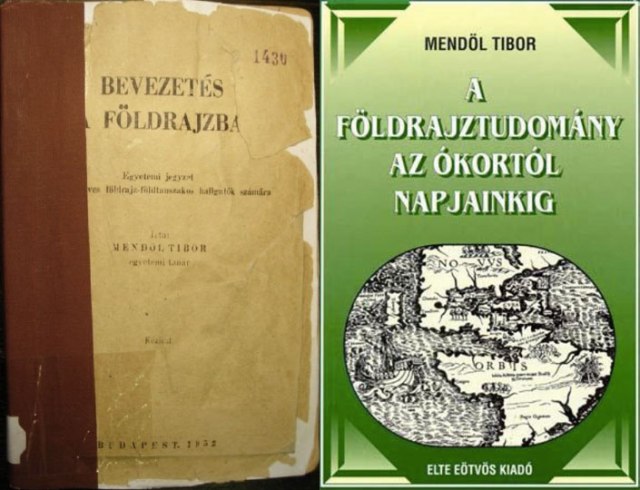
Phantom of the past: Postsocialist contradictions in Tibor Mendöl’s republished “Introduction to Geography” textbook
This paper aims to unravel the contextual layers of the postsocialist republishing of a prominent Hungarian geographer’s textbook originally written in the 1950s, which is considered here as a vehicle of the contested narrativity in […]

A „klasszikus” szociológia dekolonizálása felé: Max Weber eurocentrikus világtörténetének földrajzi kritikája
Max Weber gazdaságtörténeti és vallásszociológiai elemzéseiben széles körű áttekintést adott arról a nagy kérdésről, hogy miért éppen a „Nyugat” emelkedett ki a világtörténelem során. Az előadás célja egyrészt bemutatni Weber hipotézisének földrajzi állításait, másrészt kritika alá vetni globális összehasonlító elemzéseinek eurocentrikus földrajzi képzeletét, és végül felfedni a korabeli geopolitikai, gyarmatbirodalmi viszonyokba ágyazódó társadalomtudományi tudástermelés diskurzív alapjait és ellentmondásait.

Decolonizing the Non-Colonizers? Eastern Europe in Global Colonialism and Semiperipheral Decolonialism
The perhaps much overlooked geographical significance of recent social unrest in the USA related to the Black Lives Matter and various anti-racist and decolonial movements is how quickly they ’scaled up’ globally, sparking sharp debates in Eastern Europe for the first time. This paper aims to unpack Eastern European ‘frustrated whiteness’ through exploring a decolonial approach to this uneasy and contradictory semiperipheral position in global (post)colonialism.
Call for academic solidarity
Currently, I am represented by the Helsinki Committee in a Labor Court trial against the Research Center of the Humanities at the Hungarian Academy of Sciences, because according to the project application the institute was supposed to hire me as an affiliated Assistant Researcher (which is a public servant position), but after registering me at the National Tax Office and signing me in as member of the institution, the director and employer, historian Pál Fodor denied to sign my contract after 1 month delay and agreed-upon work, and then the Principal Investigator kicked me out of the project. The Principal Investigator, Gábor Demeter admitted in public court on 23 January 2020 that he had supplied informal “references” on my “bad” scholarship – without my knowledge – to the director and that someone had “phoned in” to ask that I not be employed at the institution. I never allowed my intellectual contribution to be used without my permission solely for others’ financial gain at the expense of my basic rights and material interests.
Hungary, (Anti)Colonialism, and the Global Cold War
52nd Annual ASEEES Convention, Washington, D.C., November 5–8 Convenor: Árpád von Klimó (The Catholic University of America, DC, USA) Discussant: Steve Jobbitt (Lakehead University, Canada) Chair: Judith Szapor (McGill University, Canada) Decolonization became a major debate […]

Postcolonial Hungary: Eastern European Semiperipheral Positioning in Global Colonialism
Is there a postcolonial Hungary? This project focuses on situating Hungary’s historical development in the global histories of colonialism and anti-colonialism. It interrogates the revival of colonial discourse in the region and explores how it displaced a politics of Western transition and convergence by reconstructing the histories of Hungarian colonial discourse and self-positioning in the world economic system.
This research is part of my Leibniz ScienceCampus “Eastern Europe – Global Area” research project at Universität Leipzig.

Opening Hungary to Global Colonialism: János Xántus and Hungarian Orientalism in East and Southeast Asia
This paper gives a postcolonialist, critical geographical, and global historical re-interpretation of this expedition based on the travel writing of Xántus published during 1877–1886. Against the dominantly biographical and documentary accounts on Xántus, which follow institutional or nationalist legitimation logics in presenting his “heroic” figure (focusing on his collections, personality and merits), this study instead engages with his activities in colonial networks, his descriptions of local industry and European export ambitions, and his global comparative ideas about colonialism and race, including comparisons between his local Hungarian, Eastern European, and Asian experiences.
 Zoltán Ginelli