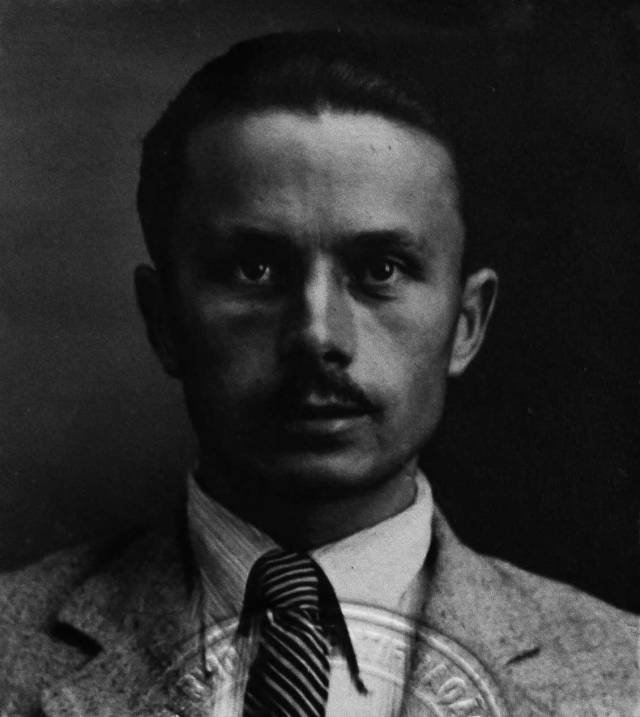
About me

I’m an independent researcher and a critical geographer, historian of science and global historian. My research is in the geographies of knowledge, world-systems analysis, and the histories of geography, colonialism and racism, with a focus on the historical relations between Eastern Europe and the Global South or the Third World.

I am currently working on two books. One for Cambridge University Press with James Mark and Péter Apor about the global histories of Hungarian relations to colonialism and anti-colonialism in the long 20th century, entitled “Hungary Between the Colonial and Anti-Colonial Worlds”. The other is my individual book project based on my doctoral research about the global histories of the “quantitative revolution” in geography.

I founded the social media group Decolonizing Eastern Europe (Facebook, Twitter).

Tovább

Tracing the Global History of the Quantitative Revolution: The Transnational History of Central Place Theory

My book project is about the global histories of the “quantitative revolution” in geography. The quantitative revolution has been an epochal textbook chapter in geography’s canonical history, when the discipline transformed into a rigorous social science backed by predictive mathematical methods in the early Cold War. An iconic scientific concept of this quantitative movement, most notably related to Walter Christaller (1933) and August Lösch (1939), was central place theory (CPT). With the globalization of the quantitative revolution after its emergence from the Second World War in the United States, location theories such as CPT became widespread in urban and regional planning across the world. How did quantitative spatial analysis and planning develop in different parts of the world? In what different geographical contexts were location theories like CPT read, reinterpreted, applied, and mobilized? How were these often very different contexts connected? This book offers to fill this significant gap in geography’s twentieth century global history by deconstructing the mainstream Anglo-American narrative and tracing the quantitative revolution through the circulation and local applications of CPT in the “Second” and “Third” worlds and into the pre-Cold War era.

Tovább

Hungarian Westsplaining

A strange ambivalence lurks behind how Hungarian politics forcefully captured ‘coloniality’ vis-á-vis the ‘West’, while ‘West’-oriented anti-colonialism rejects any systemic criticism of Hungary-centered global colonialism(s). On the full political spectrum, Hungarian culture became a hotbed of self-colonizing mimicry, a staged ‘West simulacrum’ populated by turn-key imports of ‘the West’. However, nobody addressed the geographies behind ‘West imaginaries’, the divisions of labor in ‘colonizer/non-colonizer’ difference-making, the non-comparative ‘colonial identity politics’ of competitive nativist victimhood, and the controversial, multi-layered, imagined, yet unitary concept of ‘the West’.

Tovább

The Hungarian ‘Colonial Turn’ of 2012: Commemorating 1848 as ‘Habsburg Colonialism’ in Anti-Western Public Discourse

On 15 March 2012, Hungarian Prime Minister Viktor Orbán delivered a commemorative speech during the national anniversary of the declaration of Hungarian independence from ‘Habsburg colonialism’ in 1848. The speech was pivotal in setting the course for Hungary’s new official political agenda: “we will not become a colony of the West”. The primordial historical date of 1848 served to articulate the concept of ‘Habsburg colonialism’ not only for 19th century Hungarians, but also to support the anti-Western and anti-colonialist positioning of the later communist regime (1947–1989) during its opening to decolonizing Afro-Asian countries, just as it serves today the ‘opening to the East and South’ of the Fidesz government after 2012.

Tovább

Akkumulátor-gyarmatosítás Magyarországon

A nyugatcentrikus ellenzék csupán tükrözte a kormány nyugatellenes gyarmati diskurzusát. Így született az “orosz gyarmatosítás” és a “kínai gyarmatosítás” elleni kritika is (pl. a Fudan Egyetemhez kapcsolódó tüntetésben, amelynek főszervezője a Szikra Mozgalom volt), amely erősen táplálkozott az orientalista rasszizmus régi gyarmati diskurzusaiból is. Ezekre az előzményekre épített újabban a kormány akkumulátor-ipari és elektromosautó-gyári beruházásaival szembeni “akkumulátor-gyarmatosítás” szlogenje is. A tanulmány az “akkumulátor-gyarmatosítás” politikai kommunikációját dolgozza fel a magyarországi gyarmati fordulat kontextusában és a gyarmatkritikus (dekoloniális) világrendszer-elemzés megközelítésében.

The Hungarian ‘Colonial Turn’ in 2012: Commemorating 1848 as ‘Habsburg Colonialism’ within Anti-Western Public Discourse

On 15 March 2012, Hungarian Prime Minister Viktor Orbán delivered a commemorative speech during the national anniversary of the declaration of Hungarian independence from ‘Habsburg colonialism’ in 1848. The speech was pivotal in setting the course for Hungary’s new official political agenda: “we will not become a colony of the West”. My contribution focuses on contextualizing Orbán’s speech by looking at how ‘coloniality’ has captured the limelight in Hungarian public discourse.

Tovább

Colonies Without Colonies? Race, Colonialism and Whiteness in the Hungarian Colonies of Southern Brazil

In Eastern Europe, the arguments of ‘white innocence’, historical exceptionalism, and ‘never having colonies’ had systematically denied the region’s participation in global colonialism, only to support the colonial victimhood of ‘peripheral whites’. This paper refutes these semiperipheral historical myths by exploring the story of Hungarian settlers in the Brazilian colonial frontier between the two world wars. While in Brazil the story of Hungarian settlers were de-emphasized as they were absorbed into the wider history of ‘European immigrants’, Hungarian memory politics never admitted these settlers into the history of global colonialism.

Tovább

‘We Never Had Colonies’: Episodes in the Global Histories of Colonialism and Anti-Colonialism in Hungary before the Second World War

I presented my paper ‘We Never Had Colonies’: Episodes in the Global Histories of Colonialism and Anti-Colonialism in Hungary before the Second World War at the academic conference Colonial Entanglements in Central and Eastern Europe before 1939 organized by Agata Łuksza and Łukasz Zaremba on 4–5 September 2023 at the Institute of Polish Culture, University of Warsaw (IKP UW) in cooperation with Leibniz ScienceCampus ‘Eastern Europe – Global Area’ (EEGA).

Tovább

‘We Never Had Colonies’: Global Histories of Race and Colonialism in Hungary, 1850–1939

Global history has often ignored how race and coloniality articulated Eastern European economic, structural, and world-systemic positions. This talk will refute these approaches by exposing the role played by race and coloniality in Hungary’s semiperipheral integration to the capitalist-colonial world economy between the mid-19th century and the 1940s – the era of Hungary’s opening up to global colonialism during ‘high imperialism’.

Tovább

Ferenc Kordás and Hungarian Colonies in South America

As part of my research on Hungarian colonies in South America, I’m digitizing parts of the archival collection of the Julian teacher, writer and poet Ferenc Kordás (1911–1993) held at the Déri Museum in Debrecen. In my work, I’m looking at his Brazilian sociographies, diaries, notes and poems about the tropical experience and Hungarian settler colonists during his stay there between 1936 and 1942.

Hungary and Ghana: What do Their 1960s Forgotten Relations Tell Us about the ‘Southern Opening’ After 2015?

My paper for the international conference “Visegrad countries and Africa: History and Contemporaneity” held online on 27 April 2022. I follow a world-systemic and decolonial approach to investigate Hungarian semiperipheral positioning strategies in global colonial history by looking at the interactions and converging interests of Hungary and Ghana in the early 1960s.