
In 1940, Nazi agronomist and SS-Oberführer Konrad Meyer set up an institution to devise the ‘rational’ plans of ‘colonizing the East’ in order to create an ideal landscape for settler colonists of an imperial German-Aryan […]

In 1940, Nazi agronomist and SS-Oberführer Konrad Meyer set up an institution to devise the ‘rational’ plans of ‘colonizing the East’ in order to create an ideal landscape for settler colonists of an imperial German-Aryan […]

On 15 March 2012, Hungarian Prime Minister Viktor Orbán delivered a commemorative speech during the national anniversary of the declaration of Hungarian independence from ‘Habsburg colonialism’ in 1848. The speech was pivotal in setting the course for Hungary’s new official political agenda: “we will not become a colony of the West”. The primordial historical date of 1848 served to articulate the concept of ‘Habsburg colonialism’ not only for 19th century Hungarians, but also to support the anti-Western and anti-colonialist positioning of the later communist regime (1947–1989) during its opening to decolonizing Afro-Asian countries, just as it serves today the ‘opening to the East and South’ of the Fidesz government after 2012.
On 15 March 2012, Hungarian Prime Minister Viktor Orbán delivered a commemorative speech during the national anniversary of the declaration of Hungarian independence from ‘Habsburg colonialism’ in 1848. The speech was pivotal in setting the course for Hungary’s new official political agenda: “we will not become a colony of the West”. My contribution focuses on contextualizing Orbán’s speech by looking at how ‘coloniality’ has captured the limelight in Hungarian public discourse.

Global history has often ignored how race and coloniality articulated Eastern European economic, structural, and world-systemic positions. This talk will refute these approaches by exposing the role played by race and coloniality in Hungary’s semiperipheral integration to the capitalist-colonial world economy between the mid-19th century and the 1940s – the era of Hungary’s opening up to global colonialism during ‘high imperialism’.
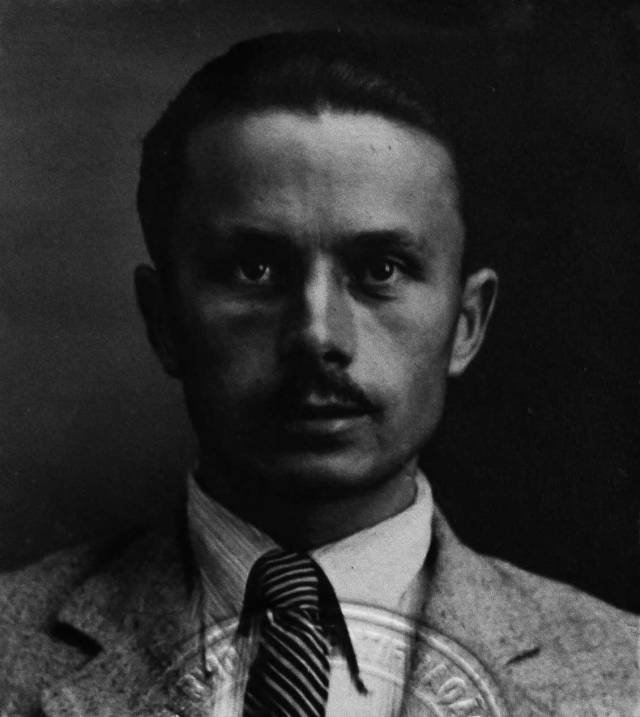
As part of my research on Hungarian colonies in South America, I’m digitizing parts of the archival collection of the Julian teacher, writer and poet Ferenc Kordás (1911–1993) held at the Déri Museum in Debrecen. In my work, I’m looking at his Brazilian sociographies, diaries, notes and poems about the tropical experience and Hungarian settler colonists during his stay there between 1936 and 1942.
My paper for the international conference “Visegrad countries and Africa: History and Contemporaneity” held online on 27 April 2022. I follow a world-systemic and decolonial approach to investigate Hungarian semiperipheral positioning strategies in global colonial history by looking at the interactions and converging interests of Hungary and Ghana in the early 1960s.
I was honored to present my paper The Return of the Colonial: Understanding the Role of Eastern Europe in Global Colonization Debates and Decolonial Struggles at the opening event of the Decolonize Hellas project and research platform on 19 May, 2021. In my paper, I introduced my world-sytemic approach to conceptualizing semiperipheral Hungarian and Eastern European colonial histories and decolonialism from a global perspective.
My paper explores competing visions of establishing a Hungarian colony in the context of Latin American Hungarian settlers in the interwar era. I introduce my concept of “transcoloniality” to traverse interconnected Eastern European and South American colonial contexts, and explore the trajectories of Hungarian colonialism through my concept “Colonial Hungaria.”

This paper follows a world-systemic and decolonial approach to investigate Hungarian semiperipheral positioning strategies in global colonial history by looking at the interactions and converging interests of Hungary and Ghana in the early 1960s. The paper focuses on József Bognár, a hugely important but forgotten political figure in socialist era Hungarian economics and foreign economic policy-making. In 1963, Bognár founded a government think tank, the Centre for AfroAsian Research (CAAR) at the Hungarian Academy of Sciences (renamed in 1973 as the Institute for World Economy). The institute evolved out of Bognár’s “Ghana job”: Ghanaian president Kwame Nkrumah, on the occasion of his Eastern European round-trip in 1961, asked Bognár to develop Ghana’s First Seven-Year Plan.
Transperiphery Conversations #1 History professor James Mark (University of Exeter) in conversation with Zoltán Ginelli discuss how to historicize Eastern Europe within the global histories of colonialism and decolonization with a focus on Hungarian experiences.
 Zoltán Ginelli