
On 15 March 2012, Hungarian Prime Minister Viktor Orbán delivered a commemorative speech during the national anniversary of the declaration of Hungarian independence from ‘Habsburg colonialism’ in 1848. The speech was pivotal in setting the course for Hungary’s new official political agenda: “we will not become a colony of the West”. My contribution focuses on contextualizing Orbán’s speech by looking at how ‘coloniality’ has captured the limelight in Hungarian public discourse.
Kategória: English Blog
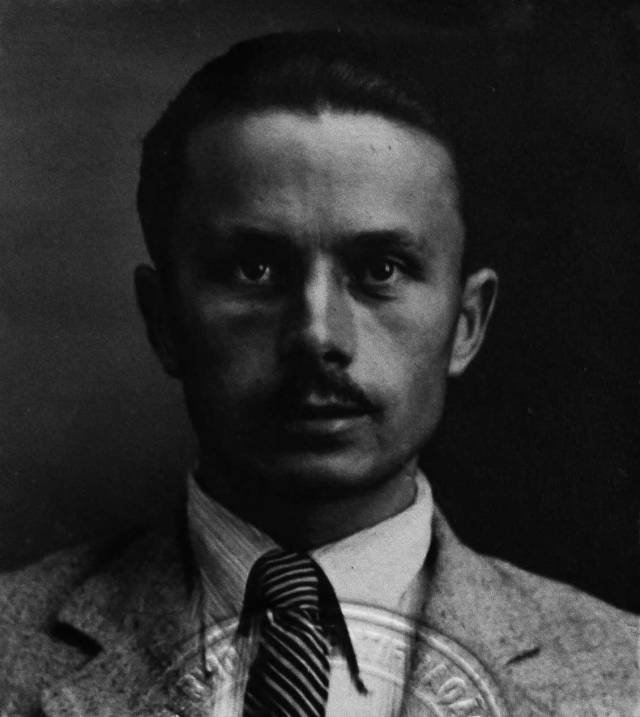
Ferenc Kordás and Hungarian Colonies in South America
As part of my research on Hungarian colonies in South America, I’m digitizing parts of the archival collection of the Julian teacher, writer and poet Ferenc Kordás (1911–1993) held at the Déri Museum in Debrecen. In my work, I’m looking at his Brazilian sociographies, diaries, notes and poems about the tropical experience and Hungarian settler colonists during his stay there between 1936 and 1942.
Hungary and Ghana: What do Their 1960s Forgotten Relations Tell Us about the ‘Southern Opening’ After 2015?
My paper for the international conference “Visegrad countries and Africa: History and Contemporaneity” held online on 27 April 2022. I follow a world-systemic and decolonial approach to investigate Hungarian semiperipheral positioning strategies in global colonial history by looking at the interactions and converging interests of Hungary and Ghana in the early 1960s.
‘Hungarian Indians’: Race, Colonialism and Memory Politics in Hungarian ‘Indian Play’
I talk about how semiperipheral “whiteness” should reconfigure our ideas of Eastern European racial and colonial history through the case of Hungarian ‘Indian play’. The “tradition” of whites playing out Native Americans in cultural and racial performances was often an antagonistic practice of anti-colonial solidarity and colonial appropriation. In the Eastern European case, it often became a way of contesting Western hegemony, but through mimicking Western colonial cultures of appropriation and “nativism”. Today, the Orbán government is building on this colonial and racial heritage through nationalist anti-communist memory politics.

Ali Baba
Decorative commercial poster by Sándor Lengyel who was a very sought-after graphic designer in the 1960s and 70s. He mostly designed commercial posters and he was famous for his cartoon-like style. Ali Baba was a brand which sold quality coffee in the socialist times.

In India
Movie poster by László Bánki for a Soviet film about India, 1953. According to the poster a performance by the famous Polish Mazowse dance company was presented as well.
The Return of the Colonial: Understanding the Role of Eastern Europe in Global Colonization Debates and Decolonial Struggles
I was honored to present my paper The Return of the Colonial: Understanding the Role of Eastern Europe in Global Colonization Debates and Decolonial Struggles at the opening event of the Decolonize Hellas project and research platform on 19 May, 2021. In my paper, I introduced my world-sytemic approach to conceptualizing semiperipheral Hungarian and Eastern European colonial histories and decolonialism from a global perspective.
Celebration of 60 Years of Ghana–Hungary Relations
It was my honor to hold a 1 hour lecture (starts after 1:35:00) at the important diplomatic event “Celebrating 60 Years of Diplomatic Relations Between Ghana and Hungary” about the history of the relations between […]

Prime Minister Ferenc Nagy Research Group
Our Ferenc Nagy Prime Minister Research Group was established in 2020 under the leadership of myself and Zoltán Kovács Kozári. My research focuses on the role of Ferenc Nagy and the Hungarian anti-communist émigré community in shaping the political discourse of “Soviet colonialism” in relation to Afro-Asian decolonisation. See our new website at nagyferenc.org.

János Fekete in Ghana
After President Nkrumah’s visit to Ghana in 1961, the president requested a wide range of expertise and investment projects from Hungary. Among them was the secret mission of János Fekete as a financial adviser in the summer of 1962 to work out currency management solutions for Ghana, which was heavily dependent on world market prices and loans from Western countries (USA, UK).
 Zoltán Ginelli